

2003
Enterprise Establishment

22
Experiences

180
Employees

115000
Cover An Area

5800
Registered Capital

120
Patents
The E-Coat Pretreatment Process Explained
electrophoresis coating production line is 90% dependent on the pretreatment process. It's a critical multi-stage sequence. It typically begins with several stages of alkaline cleaning to remove all oils and soils from fabrication. This is followed by multiple rinses. The most crucial step is the application of a conversion coating, most commonly zinc phosphate for steel. This process microscopically etches the surface and deposits a crystalline layer that provides its own corrosion resistance and creates an ideal anchor profile for the E-coat to bond to. After more rinsing, a final sealing rinse is often applied. For a TIMS electrophoresis coating production line
The Future of E-Coat: Low-Temperature Curing
electrophoresis coating production line is the development of low-temperature-cure E-coat formulations. Traditionally, E-coat requires curing temperatures of around 175-185°C (350-365°F). This consumes a great deal of energy and limits the types of products that can be coated, as it can damage heat-sensitive components or complex assemblies. New paint technologies are emerging that can be fully cured at temperatures as low as 120°C (250°F). At TIMS, we are actively working with paint suppliers to engineer and optimize the electrophoresis coating production line
What are the Components of an E-Coat Line?
electrophoresis coating production line from TIMS is a complex, integrated system. The main components include: 1. A Pretreatment System: A series of tanks for cleaning, rinsing, and applying a conversion coating like zinc phosphate. 2. The E-Coat Tank: A large, temperature-controlled tank containing the paint emulsion, anodes, circulation pumps, and filtration systems. 3. A DC Rectifier: The high-tech power supply that provides the controlled electrical current for the process. 4. Post-Rinse System: A series of spray and dip tanks to rinse off excess paint drag-out. 5. An Ultrafiltration/Reverse Osmosis System: The "kidneys" of the line, which purify rinse water and recover paint solids for reuse. 6. A Curing Oven: A precisely controlled oven to bake and cross-link the coating. 7. A Conveyor System: To transport parts through the entire process. 8. A Central Control System: The PLC and HMI that automates and monitors the entire electrophoresis coating production line
How to Achieve Full Coverage on Complex Parts
electrophoresis coating production line. Unlike spraying, which is a "line-of-sight" process, E-coating is a "field-effect" process. The electrical field between the anodes in the tank and the part being coated extends into every cavity and recessed area. The charged paint particles follow these electrical field lines, allowing them to be deposited in areas that are completely inaccessible to a spray gun. The process is also self-limiting, so as the outer surfaces become coated and insulated, the electrical current naturally seeks the path of least resistance, which is the bare metal in the most hidden areas. This is why a TIMS electrophoresis coating production line
Related Products
More items about electrophoresis coating production line
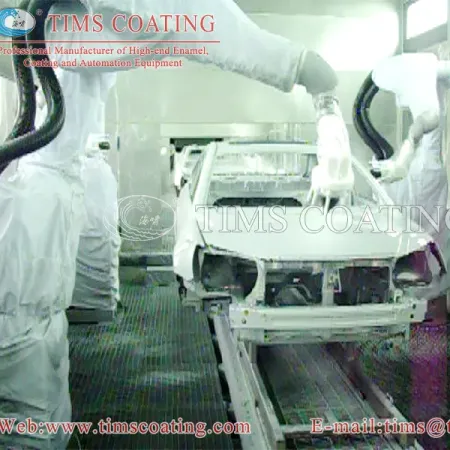
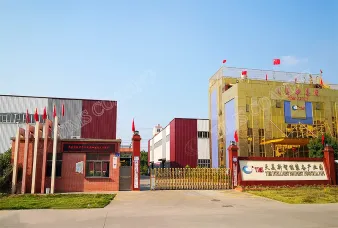
We Have The Best Solutions for Your Business
PROFESSIONAL MANUFACTURER OF HIGH-END ENAMEL.COATING AND AUTOMATION EQUIPMENT
TIMS Group Company was firstly founded in 2003 in Shenzhen City. It is a professional company engaged in the research and development, design, production, installation, commissioning, sales, after-sales service, and technical consulting of automated, information-based, greening energy saving and intelligent enamel spraying, high-temperature enamel firing equipment, dust-free painting, powder coating, electrophoresis and other coating equipment, logistics and conveying equipment, robot automation and other non-standard automation equipment. It is a national high-tech enterprise, vice chairman unit of China Enamel Industry Association, benchmark enterprise of China Enamel Industry Association, intellectual property demonstration enterprise of Guangdong Province, contract abiding and trustworthy enterprise of Guangdong Province, specialized, refined, special and new small and medium-sized enterprise of Guangdong Province, innovative small and medium-sized enterprise of Guangdong Province, gazelle enterprise of Dongguan City, member unit of China Household Electrical Appliances Association, and member of the Enamel Technical Committee of the National Standardization Technical Committee for Metal and Non metal Coatings.
User Reviews
What users say about TIMS COATING
Frequently Asked Question
Do you have any question?
The single greatest advantage of an electrophoresis coating production line is its ability to provide complete, uniform coverage on parts with complex geometries. The electrical deposition process, governed by Faraday's law, naturally forces the coating into every recessed area and internal surface, creating a seamless, pinhole-free protective layer that is impossible to achieve with conventional spray methods.
The key difference is the polarity of the part being coated. In a cathodic electrophoresis coating production line, the part is the cathode (negatively charged), which is the modern standard and provides superior corrosion resistance. In an older anodic system, the part is the anode (positively charged). TIMS primarily engineers advanced cathodic systems for maximum performance.
Coating thickness, or film build, is precisely controlled by voltage and immersion time. As the insulating layer of paint is deposited on the part, it increases electrical resistance, automatically slowing the deposition process. This self-limiting effect is a key feature of an electrophoresis coating production line, allowing for precise control and exceptional uniformity, typically within a tolerance of ±2 microns.
A robust pretreatment stage is absolutely critical for a successful electrophoresis coating production line. It typically involves a multi-stage process of cleaning, rinsing, and applying a conversion coating, such as zinc phosphate. This ensures the part is perfectly clean and provides an optimal surface profile for the E-coat to form a permanent chemical bond.
While it is possible to formulate E-coat for use as a single, final coat (often in black), it is most commonly used as a world-class primer. Its primary strengths are adhesion and corrosion protection. An E-coated part provides the perfect foundation for a subsequent powder or liquid topcoat, creating a multi-layer system with maximum durability and aesthetic appeal.
Yes, modern E-coat systems are very environmentally friendly. The process uses water-based paints with very low to zero Volatile Organic Compounds (VOCs). A well-designed electrophoresis coating production line also includes a closed-loop post-rinsing system that captures and reclaims nearly 100% of unused paint solids, making it an extremely efficient and sustainable process.
Our updates and blog posts
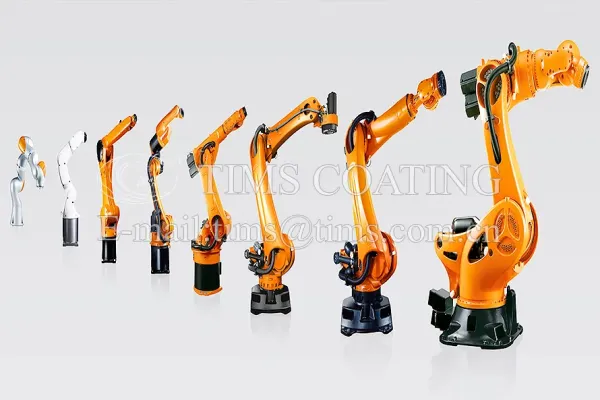
More Than a Machine: What 22 Years in the Trenches Taught Me About a High-Performance Automation Coating Production Line
Drawing on 22 years of hands-on industry experience, this article reveals the crucial difference between a simple automated setup and a truly intelligent automation coating production line. It argues that genuine ROI comes not just from replacing labor, but from creating a seamlessly integrated ecosystem that guarantees relentless quality, consistency, and throughput. Readers will learn how the right expert partnership moves beyond selling machinery to architecting a custom-engineered solution that drives long-term profitability and a powerful competitive advantage.
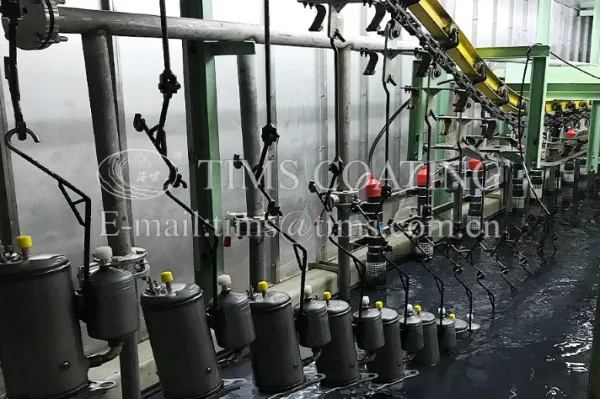
Stop Buying Coating Equipment. Start Investing in a Flawless Finish
This article challenges the conventional, spec-sheet-based approach to purchasing coating equipment. Drawing on 22 years of industry experience, it argues that true value lies not in individual machines but in a holistically engineered system designed to produce a flawless finish. It repositions TIMS from a supplier to a partner that engineers predictable, efficient, and high-quality coating outcomes, urging readers to invest in perfection rather than just hardware.
Specialized Enamel Equipment for Flawless Fusing | TIMS
This article positions enameling as a precise science that demands specialized, purpose-built hardware, not generic industrial machines. Citing 22 years of focused experience, it highlights the critical importance of temperature uniformity and climate control in the process. It presents TIMS as a master of **enamel equipment** engineering, offering not just machinery but the deep scientific expertise required to achieve a flawless, premium-quality enamel finish.